In today’s hyper-connected world, real-time IoT analytics solutions are no longer a luxury—they are a necessity for businesses aiming to stay competitive. With billions of devices generating streams of data every second, the ability to process, analyze, and act on this information instantly can make the difference between growth and stagnation. Whether it’s optimizing industrial operations, enhancing customer experiences, or predicting maintenance needs, real-time insights from IoT devices are transforming industries.
What Are Real-Time IoT Analytics Solutions?
At its core, real-time IoT analytics involves collecting data from connected devices and processing it instantly to generate actionable insights. Unlike traditional analytics, which rely on batch processing and delayed reporting, real-time solutions allow organizations to respond immediately to evolving situations. This capability is particularly valuable in sectors like manufacturing, logistics, healthcare, and smart cities, where milliseconds can impact safety, efficiency, and profitability.
Read More : Identifying and Removing Threatware from Your System
Real-time IoT analytics solutions combine several technologies:
- IoT sensors and devices: Continuously capture data from the physical environment.
- Edge computing: Processes data locally to reduce latency.
- Cloud platforms: Aggregate and store large volumes of information securely.
- Analytics engines: Use AI, machine learning, and advanced algorithms to uncover patterns and trends.
By integrating these technologies, businesses gain a comprehensive view of operations and the power to make data-driven decisions in real time.
Why Businesses Need Real-Time IoT Analytics
- Instant Decision-Making: Companies can detect anomalies, prevent downtime, and optimize processes as events occur.
- Predictive Maintenance: Real-time data from machines helps predict failures before they happen, saving costs and avoiding unexpected disruptions.
- Operational Efficiency: Continuous monitoring allows for dynamic adjustments in production, logistics, and energy management.
- Enhanced Customer Experience: For smart devices and connected services, immediate insights enable personalized interactions and faster issue resolution.
- Data-Driven Innovation: Organizations can identify new trends, optimize product designs, and innovate faster with live data.
In short, real-time IoT analytics solutions empower organizations to move from reactive to proactive strategies.
Key Components of a Real-Time IoT Analytics Architecture
Implementing an effective real-time IoT analytics solution requires a well-structured architecture. The core components include:
Read More : Balancing Trust and Technology in a Global Remote Work Landscape
- Data Ingestion Layer: Captures high-velocity data from IoT devices and sensors. Technologies like MQTT, Kafka, and HTTP APIs are commonly used.
- Edge Processing Layer: Handles preliminary analytics close to the source, reducing latency and network load.
- Streaming Analytics Engine: Processes continuous data streams using frameworks like Apache Flink or Spark Streaming.
- Visualization & Reporting Layer: Dashboards, alerts, and interactive reports that allow stakeholders to act immediately.
- AI & Machine Learning Layer: Applies predictive models and anomaly detection to derive actionable insights.
Together, these layers create an ecosystem where data flows seamlessly from devices to decision-makers.
Challenges in Real-Time IoT Analytics
While the benefits are significant, deploying real-time IoT analytics solutions comes with its challenges:
- Data Volume & Velocity: IoT devices generate massive data streams, making storage and processing complex.
- Integration Complexity: Diverse devices, protocols, and platforms require careful coordination.
- Latency & Network Constraints: Ensuring low-latency analytics, especially for critical applications, demands edge computing and optimized data pipelines.
- Security & Compliance: Real-time data must be protected against cyber threats, and adherence to privacy regulations is crucial.
- Scalability: Solutions must adapt to growing numbers of devices and increasing data flow without compromising performance.
Overcoming these hurdles requires the right combination of technology, strategy, and expertise.
Use Cases Across Industries
Manufacturing
Factories use real-time IoT analytics solutions to monitor machinery, detect defects, and automate quality control. Predictive maintenance reduces downtime, while production optimization increases throughput and efficiency.
Healthcare
Connected medical devices and wearables provide instant patient data, allowing clinicians to make timely decisions. Real-time alerts can prevent medical emergencies and improve overall patient care.
Smart Cities
From traffic management to energy consumption, cities leverage IoT analytics to enhance urban living. Real-time insights help reduce congestion, optimize resource use, and improve safety.
Retail
Retailers track inventory, monitor foot traffic, and personalize marketing campaigns based on live data. This agility boosts sales and improves customer engagement.
Logistics & Transportation
Fleet management systems analyze GPS, sensor, and telematics data in real time to optimize routes, predict maintenance, and reduce fuel costs.
Best Practices for Implementing Real-Time IoT Analytics
- Start Small: Begin with a pilot project before scaling across the enterprise.
- Prioritize Critical Data: Focus on data streams that have the highest business impact.
- Leverage Edge Computing: Reduce latency by processing data near the source.
- Ensure Security from Day One: Encrypt data, manage access, and comply with regulations.
- Adopt Flexible Architectures: Use cloud-native and modular frameworks for scalability and adaptability.
- Invest in Visualization: Intuitive dashboards and automated alerts enable faster decision-making.
Future Trends
The landscape of real-time IoT analytics solutions is evolving rapidly. Some emerging trends include:
- AI-Enhanced Analytics: Machine learning models will become more sophisticated, predicting trends and automating decision-making.
- 5G Integration: Ultra-low latency networks will enable even faster data transmission for mission-critical applications.
- Digital Twins: Real-time analytics combined with digital twins will simulate and optimize complex systems virtually.
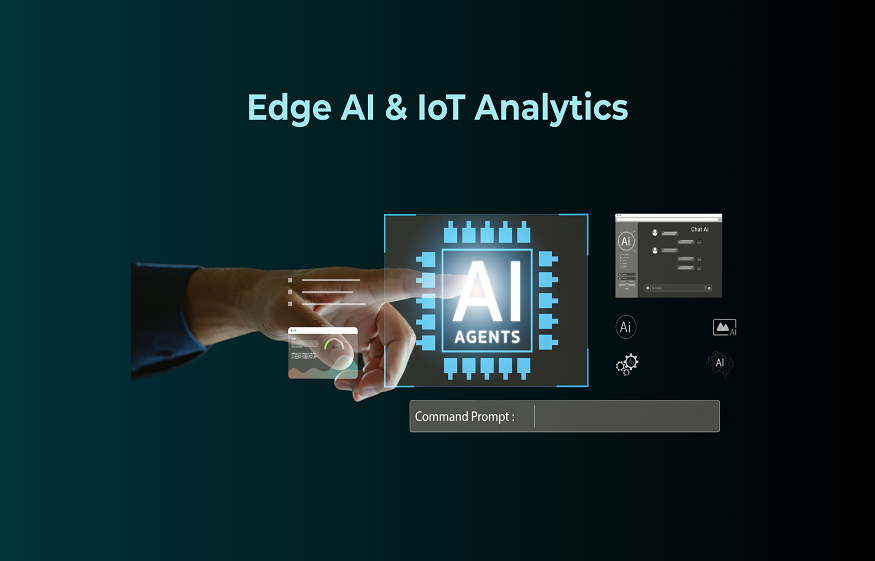
- Edge AI: Advanced analytics and AI models will run directly on IoT devices, reducing dependence on central servers.
- Sustainability Analytics: Real-time monitoring will help organizations reduce energy consumption and carbon footprint.
Conclusion
Businesses that embrace real-time IoT analytics solutions gain a competitive edge by transforming raw data into actionable insights instantly. From operational efficiency and predictive maintenance to enhanced customer experiences and smarter cities, the potential is limitless. The key is to adopt a strategy that balances technology, scalability, and security while keeping a clear focus on business objectives. In a world driven by data, the organizations that act in real time are the ones that will lead tomorrow.