
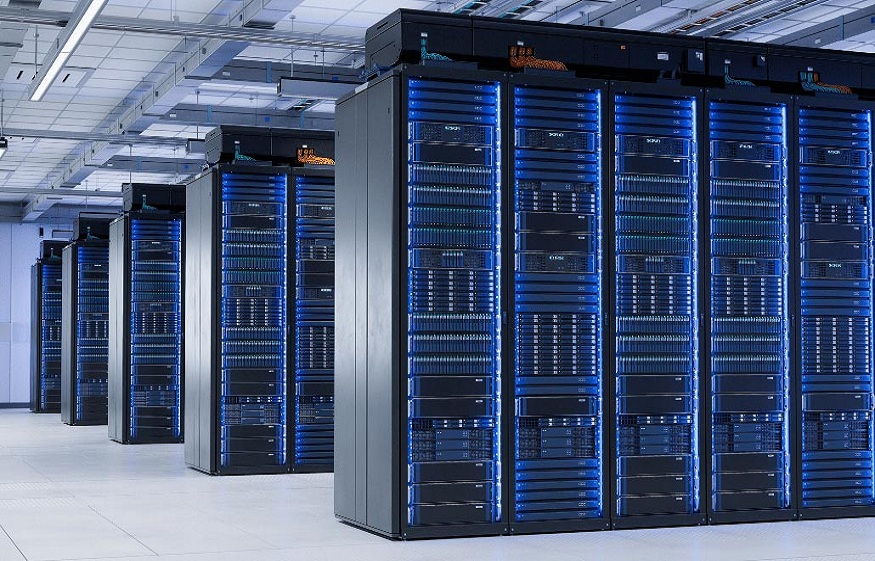
In today’s data-driven world, GPU Clusters at Scale are no longer a luxury—they’re a necessity. From AI model training and scientific simulations to real-time analytics and graphics rendering, modern workloads demand enormous computational horsepower. A single GPU can only do so much, but when hundreds or even thousands are orchestrated together in a well-architected cluster, the possibilities become almost limitless.
Why Scale Matters in GPU Clusters
Scaling GPU clusters isn’t just about adding more hardware—it’s about orchestrating resources efficiently to maximize throughput and minimize bottlenecks. Large-scale GPU deployments allow businesses and research teams to:
- Accelerate AI and ML workloads: Training state-of-the-art models like large language models (LLMs) or computer vision networks can take weeks on a single GPU. A scaled cluster reduces this to days or even hours.
- Enhance parallel processing: Tasks that can be broken into smaller pieces—like simulations, rendering, or big data computations—benefit immensely from distributed GPU clusters.
- Optimize cost-efficiency: Properly managed clusters ensure that resources are allocated where they are needed most, avoiding underutilization or idle GPUs.
Read More : The Importance of Expert SaaS Marketing Agency Support
In essence, GPU Clusters at Scale provide the speed and flexibility necessary to handle workloads that were previously infeasible.
Key Components of a Large-Scale GPU Cluster
Building and managing a GPU cluster at scale requires careful consideration of several elements:
- High-performance GPUs: NVIDIA’s A100, H100, or AMD’s MI250 are common choices for heavy AI and HPC tasks. Selecting the right GPU depends on workload type and budget.
- Network infrastructure: Low-latency, high-bandwidth networks such as InfiniBand or NVLink are crucial for inter-GPU communication, especially when distributing deep learning training across nodes.
- Storage solutions: Fast SSDs or NVMe-based storage ensure that data bottlenecks don’t negate GPU performance.
- Cluster orchestration software: Tools like Kubernetes, SLURM, or specialized AI platforms help manage resources efficiently, schedule jobs, and monitor workloads.
- Cooling and power systems: Large-scale GPU deployments generate immense heat and consume significant power; efficient cooling and reliable power delivery are essential for stable operation.
Applications That Benefit From GPU Clusters at Scale
- Artificial Intelligence & Machine Learning: From natural language processing to computer vision, AI workloads thrive on parallel GPU processing. Large-scale clusters allow rapid experimentation and faster iteration cycles.
- High-Performance Computing (HPC): Simulations in physics, climate modeling, and genomics require computational capabilities that only GPU clusters can provide at scale.
- Media and Entertainment: Film studios and game developers leverage GPU clusters for rendering complex scenes, special effects, and virtual production pipelines.
- Finance and Analytics: Risk modeling, fraud detection, and real-time analytics benefit from accelerated computations that large GPU clusters provide.
Challenges in Scaling GPU Clusters
While the benefits are clear, operating GPU clusters at scale comes with its share of challenges:
- Cost management: GPUs are expensive, and scaling quickly can strain budgets. Optimizing utilization is critical to justify investments.
- Resource scheduling: Efficiently allocating workloads across GPUs to avoid bottlenecks requires sophisticated orchestration tools.
- Maintenance and monitoring: Large clusters need constant monitoring for performance degradation, hardware failures, and software updates.
- Data movement: Moving massive datasets between storage and compute nodes can become a bottleneck if networks aren’t optimized.
Read More : The Ultimate Guide to Choosing the Right SaaS Marketing Agency
Organizations often address these challenges through hybrid models, combining on-premise clusters with cloud GPU offerings for flexibility and cost efficiency.
Best Practices for Managing Large-Scale GPU Clusters
- Start small, scale strategically: Avoid buying hundreds of GPUs upfront. Begin with a pilot cluster, understand workloads, then scale efficiently.
- Leverage orchestration frameworks: Kubernetes with GPU support or Slurm ensures workloads are balanced and resources are maximized.
- Monitor performance metrics: Track GPU utilization, temperature, memory usage, and network throughput to detect bottlenecks early.
- Automate maintenance tasks: Use scripts or monitoring tools to handle updates, failover, and performance tuning.
- Optimize data pipelines: Minimize data transfer delays using caching, high-speed storage, and optimized network topology.
The Future of GPU Clusters at Scale
As AI models grow larger and simulations become more complex, GPU Clusters at Scale will be at the heart of technological innovation. Emerging technologies such as AI-optimized interconnects, liquid cooling, and cloud-managed GPU clusters promise even greater efficiency and accessibility. Businesses and research institutions that master large-scale GPU orchestration will gain a competitive edge, unlocking insights and capabilities that were once out of reach.
Whether you’re training the next generation of AI models or running complex simulations, investing in GPU clusters at scale isn’t just a technical decision—it’s a strategic one.